How to Boost Tourism and Drive Foot Traffic to Local Businesses Using Digital Itineraries
- Andrew Applebaum

- Jul 25, 2025
- 5 min read
Updated: 3 hours ago
By Andrew, Digital Tourism Expert
Local tourism teams can boost tourism and drive measurable foot traffic to main street merchants by replacing printed brochures with interactive, self-guided digital itineraries. Modern travelers demand flexible, on-demand exploration tools that surface local history, cultural stories, and business promotions directly on their smartphones.
To boost tourism and support local merchants, destinations must transition from static paper guides to interactive digital itineraries. By deploying self-guided tours that integrate points of interest with local business listings, tourism organizations can extend visitor dwell time and stimulate economic growth. This infrastructure allows small teams to easily publish real-time content updates, track visitor engagement patterns, and eliminate high print production costs.
Deploying digital infrastructure to support local merchants
Tourism directors and business improvement areas face intense pressure to deliver measurable economic impact with limited staff and tight budgets. Relying on printed guides makes it difficult to update seasonal routes or highlight new merchant promotions. When designing an audio tour engine, we focus on removing these operational bottlenecks by providing lightweight tools that require no technical background or dedicated development resources.
A major operational challenge for local teams is keeping destination content accurate without overburdening staff. According to a Destinations International study, 72% of travelers expect mobile servicing during their trips: https://destinationsinternational.org/research. This high expectation creates an immediate challenge for destinations relying on physical signage or paper maps, as visitors frequently struggle to find up-to-date business hours or hidden community assets.
By utilizing main street digital engagement tools, organizations can instantly push critical information to a visitor's mobile browser or smartphone app. This digital deployment model ensures that front-line merchant staff do not need to constantly manage complex systems. Instead, individual business owners simply display a window poster at their counter featuring a location-specific QR code, allowing visitors to scan the code to unlock curated maps, historical narratives, and nearby retail offers.
Comparing custom app development with subscription platforms
When evaluating how to launch a digital visitor experience, tourism boards usually look at two distinct financial paths. The choice between building a proprietary application from scratch or using a dedicated software-as-a-service model impacts both upfront capital and long-term staff maintenance constraints.
Cost Comparison Framework
Operational Variable | Custom Agency Software Development | Driftscape Subscription Model |
Upfront Capital Expense | Typically starts at $90,000+ for initial engineering. | Affordable, predictable annual subscription tier. |
Maintenance Retainers | Required annually to patch breaking mobile OS updates. | Included in subscription without extra engineering overhead. |
Content Update Cycles | Delayed by manual development or app store approvals. | Instant updates via cloud-based publishing parameters. |
Staffing Requirements | Requires technical staff or ongoing developer contracts. | Low-lift forms managed by a single tourism coordinator. |
To review specific subscription options for your destination, you can review our Driftscape annual subscription pricing: https://www.driftscape.com/pricing.
How to configure features in the Driftscape builder
Managing content shouldn't require an engineering degree. In deploying solutions for our partners, the first technical step is utilizing standard data input forms within a simplified administrative dashboard. Small teams can build, organize, and launch interactive trails by following a straightforward, form-driven sequence.
[Form Data Input] -> [Chronological Ordering] -> [Cloud CMS Publishing]Input individual data points: Administrators open a standard data entry form to add individual Points of Interest. For each point, the user inputs precise geographic coordinates, a descriptive text narrative, and relevant media attachments such as audio tracks or images.
Assemble the tour path: To package these separate points into a coherent trail layout, administrators assemble a structured chronological list. The system allows you to sequentially organize and number the specific locations to map out a clear, step-by-step visitor path.
Set publishing parameters: Pushing content live is handled entirely via cloud-based CMS publishing parameters. This updates native and mobile browser layouts instantly, bypassing the need to wait for native app store update approval cycles.
Turn traditions into measurable digital campaigns
Transforming existing community assets into digital itineraries allows destinations to capture clear metrics while spreading foot traffic beyond obvious historical hot spots. This operational strategy works well because it leverages stories your community already possesses, minimizing initial content production overhead.
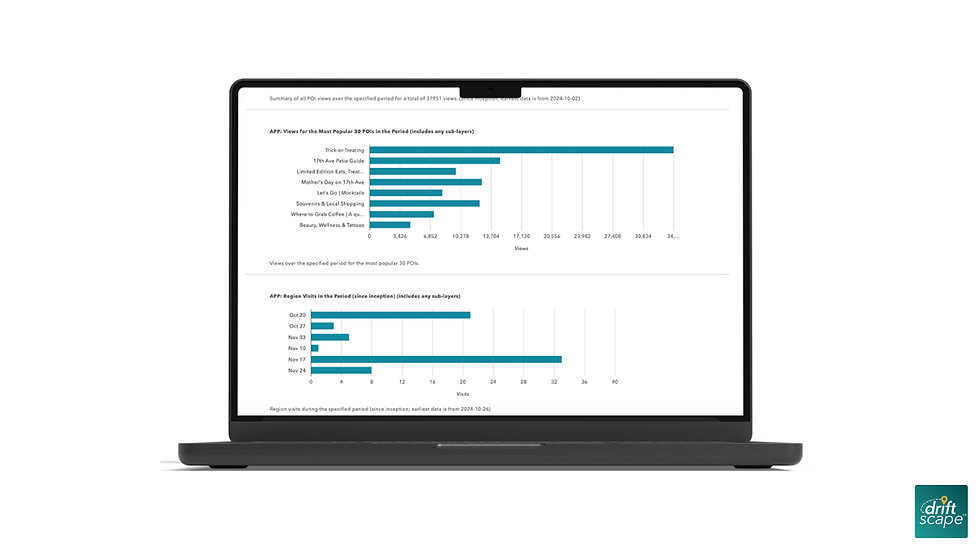
Consider the physical reality of managing a seasonal campaign. In a traditional setup, staff spend hours printing materials and tracking participation manually. By moving the experience to a mobile interface, visitors easily navigate through neighborhood streets while the system records anonymized data on which stops receive the highest engagement.
A clear example of this strategy is found in the City of Thunder Bay. The local tourism office wanted to find a more interactive way to engage residents and visitors during the fall season. They created a self-guided digital tour of residential homes decorated for Halloween, turning an established community tradition into an organized, app-based driving and walking route.
This campaign generated 25,000+ views and resulted in a 1000% increase in digital engagement for the destination's platform. In practical terms, this outcome suggests that highly localized, seasonal themes can generate massive participation when paired with an accessible mobile map.
It does not prove that every standard tour will achieve identical volume, as the results heavily depend on local promotional efforts and the existing popularity of the community tradition. To replicate this success, a similar tourism team should identify a popular local event or neighborhood decoration tradition and build a simple, sequential digital path around those pre-existing physical locations.
Key takeaway: A successful digital tourism strategy does not require an expensive custom app or a team of software developers. By utilizing structured data forms and leveraging seasonal community themes, a small tourism office can launch interactive itineraries that actively drive foot traffic directly to the doorsteps of local main street merchants.
Frequently asked questions
Q: Is a self-guided tour app better than traditional paper brochures?
A: Yes. A digital app allows small teams to push instant content updates, integrate interactive audio storytelling, and eliminate thousands of dollars in recurring paper print and distribution costs.
Q: What kind of data can a tourism organization gain from a visitor engagement platform?
A: The best place to start is reviewing anonymized analytics. This data provides precise performance metrics, including total point of interest views, popular tour routes, and peak visitation times without compromising user privacy.
Q: Can small towns use this technology, or is it just for big cities?
A: Yes, smaller municipalities often see the greatest benefit. The platform is highly scalable, allowing small teams to highlight hidden gems, rural historic sites, and local merchant promotions without requiring a large technology budget.
Q: Do visitors need a constant cellular connection to use these digital tools?
A: No. To solve low cellular connectivity challenges in rural areas or historic brick buildings, the software utilizes off-grid data caching support, allowing travelers to download maps and text narratives in advance for uninterrupted offline use.
Book a live dashboard walkthrough
Ready to upgrade your destination's digital infrastructure and support your local merchants? Request an interactive platform demonstration to see how our administrative builder can streamline your content creation workflows.
About the author: Andrew Applebaum is a digital tourism expert at Driftscape who helps destinations, BIAs, museums, and tourism teams create self-guided visitor experiences rooted in local stories. He writes about practical ways to improve visitor engagement, support local businesses, and make tourism initiatives easier to launch and manage.
View Andrew’s profile and connect on LinkedIn.


Comments